
My journey through art and literature, photography and travel, music and poetry
Saturday, 6 May 2017
East Finchley Open Artists: Exhibition News
East Finchley Open Artists: Exhibition News: EXHIBITION NEWS Howard Hodgkin, Absent Friends, National Portrait Gallery, 23 March-18 June 2017 FRANCESCA ALBINI writes:- W...

Tuesday, 28 March 2017
Free Fire - Film review
From Wikipedia: 'Free Fire is a 2016 British action-comedy film directed by Ben Wheatley, from a screenplay by Wheatley and Amy Jump. It stars Brie Larson, Sharlto Copley, Armie Hammer, Cillian Murphy and Jack Reynor.' It will be released in the UK on 31 March.

Free Fire. That's pretty much it for the plot. So why should anybody want to sit through 90 minutes of gratuitous violence? Because it's very well orchestrated and compelling. The interweaving of the free-jazzy music with whistling and rumbling gun shots, other sound effects, surround-sound voices, is very clever, and so are the lighting, photography, and location (a shabby warehouse). The characters are quirky, each in their own way, and funny, but not excessively so. In a way, it's like watching a cheap Seventies movie with modern definition of image and sound. A treat if you have bouts of nostalgia... But the question arises: whom is this film for? What is the target audience, what will be the effective audience? Not strong enough to be a cult movie, not Hollywood enough to be a Hollywood movie, it will probably linger in a state of DVD limbo.
The following is NOT a spoiler. Talking with the projectionist after the screening, he suggested that if it had a different ending, it could appeal better to a Hollywood, mainstream, audience. As he didn't suggest what ending would have worked better, I went through all the possible endings in my head, that would have made it more commercial, but didn't find any convincing ones.
My verdict: if you want a very pleasant 90 minutes of a well directed and acted mindlessness, if you enjoy well choreographed stunt work and revel in the anxiety of closed spaces, you will love this film. I know I did.

Free Fire. That's pretty much it for the plot. So why should anybody want to sit through 90 minutes of gratuitous violence? Because it's very well orchestrated and compelling. The interweaving of the free-jazzy music with whistling and rumbling gun shots, other sound effects, surround-sound voices, is very clever, and so are the lighting, photography, and location (a shabby warehouse). The characters are quirky, each in their own way, and funny, but not excessively so. In a way, it's like watching a cheap Seventies movie with modern definition of image and sound. A treat if you have bouts of nostalgia... But the question arises: whom is this film for? What is the target audience, what will be the effective audience? Not strong enough to be a cult movie, not Hollywood enough to be a Hollywood movie, it will probably linger in a state of DVD limbo.
The following is NOT a spoiler. Talking with the projectionist after the screening, he suggested that if it had a different ending, it could appeal better to a Hollywood, mainstream, audience. As he didn't suggest what ending would have worked better, I went through all the possible endings in my head, that would have made it more commercial, but didn't find any convincing ones.
My verdict: if you want a very pleasant 90 minutes of a well directed and acted mindlessness, if you enjoy well choreographed stunt work and revel in the anxiety of closed spaces, you will love this film. I know I did.
Saturday, 25 March 2017
The Sublime Art of Faffing
As in a dream where our pursuer cannot catch us nor we escape, Achilles could not overtake Hector, nor could Hector shake him off. The Iliad, book 22, ca 760–710 BC
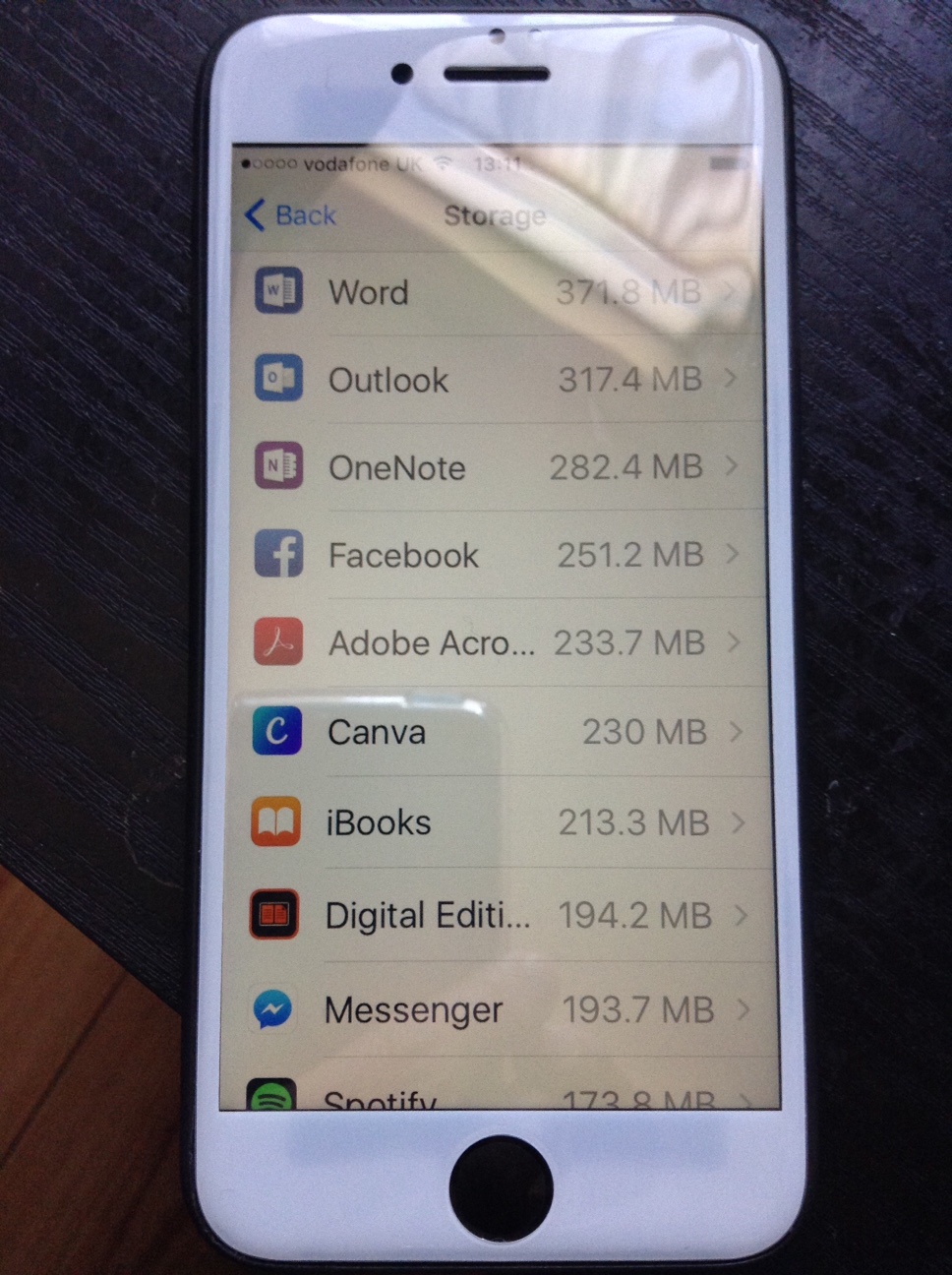
The feeling of not getting anywhere, or of running on the spot, or like a headless chicken, is not new. Neither is the desire and the anticipation of getting somewhere, of getting things done, of bettering ourselves in a way or another.
Before apps, google and mobile phones, I had my Mum. When I felt that I wasn't getting anywhere, or that I wasn't solving the problem that I wanted to solve, we would make ourselves a cup of coffee and we would sit on the couch with pen and paper. The only interruptions were my dad, and the phone, that in our house was ringing constantly. Apart from that, the process was quite simple. I would state a problem, we would discuss a goal, and organise a plan of action. She would pose questions, I tried to answer, and she would give me suggestions. The feelgood factor was incredible. We were solving everything. Of course, we never had a follow up session on any of my problems, because the next time we sat down there would be a new problem to tackle.
FORWARD TO NOW: Ah, isn't it great that now, instead of Mum, pen and paper, we have an app for everything, a million ways to be organised, retrieve information, and all the stuff we can set up in order to convey our message! Social media, connectivity. We can set up a blog, set up a website, a Facebook page, a twitter account... Then we can set up an app that connects them all. And, see, everything is set up to receive and distribute our amazing content.
So why am I feeling like Achilles chasing Hector? Why am I feeling the buzz of all of these apps and connections and opportunities, and find that the only thing that is not flourishing is... content? Because I spend all of my time and energy perfecting the Sublime Art of Faffing. Here is how it works. I discover a new app that can schedule my amazing content across all the different platforms. How exciting. So I register, and then I have to link it up to my various accounts, which proliferate at a frightening rate. It goes without saying that I have forgotten most of my passwords. Easy, I have an app that contains them all, so all I need to do is sign in. Ah, but the app doesn't recognise my location, so it sends me an email to verify that I am who I say I am, although I am not where the app wants me to be (at home). But while I search my email, my email app decides to update, and I have to wait until it's done. While I'm waiting, I do something else, like look something up, which reminds me that I haven't updated my calendar, that I double booked myself, that I have to cancel something. I check my fb page for the latest news and events, get distracted by something else, finally retrieve my email verification code. Connect all the accounts that need to be connected to show my amazing content, and guess what? I had no time to create any.
Monday, 20 March 2017
The Lost City of Z - my take on

I'm no film critic, in fact I have very little knowledge of cinema, and never wrote a film review in my life. At the same time, I am very fortunate to be able to attend film previews, every now and then, so I feel sort of an obligation to share my impressions.
This film is amazing and deserves to be seen on a big screen, so, don't wait for the DVD to come out, like I usually do, go see it big, the bigger the better.
It's 1.40 minutes of total immersion into a world of adventure, discovery, war, deaths, births, love, envy, friendship and poetry, and what makes it extra magical is that it is a true story. Photography and settings are extremely powerful, and convey more than just a sense of history and place, there are human emotions, fear, horror, the unknown and the totally surreal, like an opera performed on a log stage in a settlement in the middle of the jungle.
Fawcett's journeys to charter uncharted territories are followed at a distance by his wife, whose poems accompany him and his companions. But the strongest piece of poetry is her quotation from John Browning: '...A man's reach should exceed his grasp'. In other words, you never entirely fulfil your dreams.
I have recently attended a workshop on mobile journalism where the photographic rule of thirds was, maybe rightly so, strongly advised. So, I took special interest in the framing of the scenes, because in most cases it seems to be crossing over to almost centre frame, leaving space between the character and the edge of frame. I think that conveyed a double effect, exposing the character to the unknown surround him, and crowding the centre of the frame to convey the sense of claustrophobia that the jungle gives together with its sense of vastness. Contrasting elements of old world and new world, 'civilized' austere world and dynamic, fluid and terrifying wilderness, snakes, panthers, piranhas, mosquitoes, but, most of all, humans in their might and vulnerability. The end of the story is almost a spiritual transition. Enjoy, be scared, angry, elated and mesmerised.
And, if you have a spare hour, it's definitely worth watching this talk by David Grann, the author of the book on which the film is based.
Friday, 17 March 2017

Ideas and how to retain them
Where do I get my inspirations from? Easy. I get inspired by a lot of things. I see or read or hear something, and I get an idea. The problem is how to retain it. I might go to an art gallery and see a painting that inspires me. The inspiration I get very often has little to do with the original work. I don’t want to copy a certain painting, I want to retain and work and pass on the inspiration that came to me by looking at that painting. So how do I do that? Taking a picture of that painting doesn’t seem to work. When I look at it later, it doesn’t talk to me in the same way. The other solution is key words, but on their own they also lose strength. I tried different apps, like Evernote, OneNote, google keep. They are definitely useful but what I would need is an app that helps me identify and retain my mental process, that goes from the trigger, i.e. the painting or book or conversation, to the excitement that precedes the idea, to the idea itself. I somewhat think that it would work in columns or panels. Brief description or picture of the work; raw impressions, ways of translating it into my creative world. While I wait for somebody to come up with this ideas app, I might just stick to a notebook, and then read it aloud into google docs and organise it later .
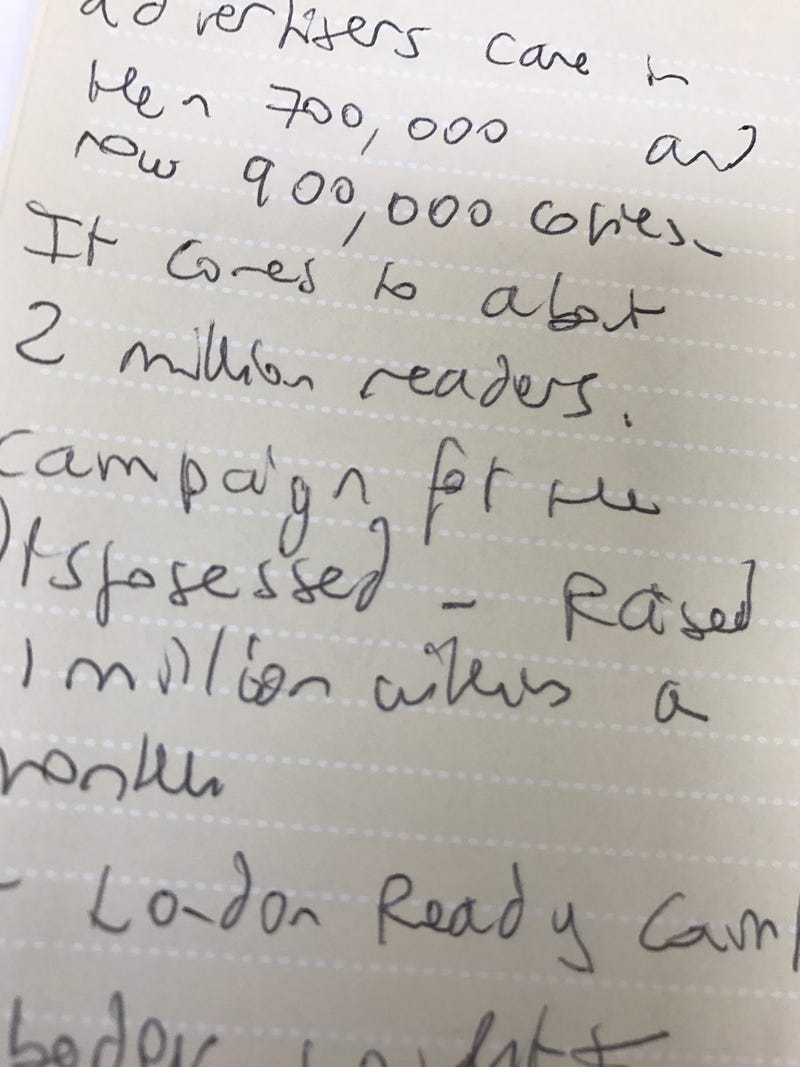
As I said, I get inspired by a lot of things, so I’m never short of ideas, but still, a lot of thoughts get lost and perhaps some of them are good thoughts.
Originally posted on medium
Wednesday, 11 January 2017
Reflections upon 2016

I'm at a bloggers meetup, there are about ten people around a white table with colourful jellybeans that I seem to be the only one eating. We are all writing about last year and next year. So, here goes. In January I found it more difficult to walk. In February I went to Malta on a cricket trip with the Eccentrics cricket team. Malta was amazing, like something I've never seen and yet remember. It was medieval and full of imaginary Knights roaming the dusty streets. Hubby injured his ankle at the cricket match and I almost laughed thinking that now I had to help him walk. In April I got a brand new hip, hubby cooked and I spent the days weaving,
making jewellery and relearning to walk. I then walked in Italy and in the California desert. 2016 was good. 2017 will be my blogging year, where I won't let validation sickness get in the way of my creativity. I'll keep on growing like a tree, twisted and torn, but with many new branches, a few dead leaves and lots of new green ones. I will be like my cherry tree in the winter. Proud of change.
Thursday, 29 September 2016
Colours

We walked into the little hut that is David Hul's Scrimshaw Studio in Julian, Ca. While we were admiring all his decorated skulls and knives and learning about scrimshaw, David said to me, 'You are very colourful!'. I'm not sure it was meant as a compliment, but it made me smile, because the more I travel, the more I tend to accumulate layers of colour, mementos, souvenirs, gifts, in a happy, wild confusion. While I move through space and time, the stationary residents look at me with amusement or, rather, bemusement. When I think of this layering, tattoos of experience and memory, good and bad branding on the skin or the heart or the wrinkles, I think of my long lost copy of Superslave, gone AWOL sometime at the end of the Seventies. I always thought of buying it again, but never did. What I remember of Superslave is that he was going on a lot of adventures. These adventures changed him, his hair was shorter or longer, the clothes different. In most of the adventures Superslave died, and came back to life with a new tattoo that symbolised his new death - if he drowned, he would have a tattoo of waves, etc. He ended up covered in tattoos.

I didn't ask David Hul what tattoos he might have accumulated in his life as a California scrimshaw artist, but his studio was layered with so many things, bones, pictures, books. I could have spent hours in there, but I didn't. I guess I thought I could just 'look him up later', but David is an off the grid type of guy, so I lost a great opportunity for learning. Perhaps because I was momentarily blinded by protagonism, I forgot how to be an explorer and discover more. All I could find online later was this amazing picture of him in his studio.
Saturday, 3 September 2016
Interesting

Others have an otherness that seems so perfect. Otherness is the only thing I cannot achieve. I wonder if others can achieve it. Or if it's the limit of being self that you can never quite surprise yourself as novelty can. There is a mystery in other that I don't quite find in self. A new dress before it is worn promises things that dissipate once worn. I guess that, although I am a very curious person, I don't seem to have much curiosity for self, I don't believe there is a mystery about me, just a work in progress. Hence, I have to move on, all the time. Other, well, other cannot but move all the time, blurred like trees from a train. I want to stop the blur, I want to remember, but as soon as I do, it becomes self.

Location:Deal, Kent
Sunday, 3 July 2016
On identity, value and more

First of all, this is not one of my works, it's Bernard Meadows. I believe. In a way it could be my work. I spend my days looking for mirrors, stories that could be my stories, I collect, to save memories, mine and others', in pleasant confusion, happy to lose my boundaries between me and my story. I don't remember the titles of the books I read. I don't remember where that pebble or that trinket comes from. But I do remember that everything I collect is there because it's important to me, it informs who I am. I'd like to think that others might be collecting me as part of blurring their own boundaries. Sometimes I feel that it's so hard to be collected, one pebble on a shingle beach. That makes me sad and makes me question my collection and my value. And then I start losing things, moments, creations. Because the round peg doesn't fit in the square hole I feel like giving up to avoid bashing it in. But perhaps the solution is to leave the peg sitting on the box with the holes and let others try to make it fit or not, while I keep on collecting.
Location:Mayfair
Wednesday, 4 May 2016
On weaving and other stories

The word 'trama' in Italian means both weft and plot. Perhaps because of that, I have always associated weaving with narrative. Perhaps, also, because I was thinking of Penelope's web which seemed to unravel parallel to Odysseus's journey. I don't know if weft and plot have etymological affinities in English, but the word 'thread' for instance is used to describe a continuity in a situation or story. Stories have been woven and embroidered throughout times and cultures. But it was only when I started weaving that I understood why at a deeper level. Everything gets woven into your fabric, the music you are listening to, your thoughts, your memories. It also becomes a way of making sense of things, 'string' them together. My interest for weaving, and, more generally, for fibre art, I think started from a passion for upcycling, repurposing, finding ways to use scraps of anything, paper, cardboard, and, of course, fabric and yarn. For some reason, this journey kept on taking me back to Japan, where recycling is not just a modern buzzword, a concept used to soothe the consumer's sense of guilt. Creative reuse of material has existed in Japan for hundreds of years. At the basis of it is the concept of 'mottainai', a regret for waste. 'Mottainai' is an old Buddhist word, linked to the Shinto idea that objects have souls. 'Boro' is the clothing used by peasants and artisans between the 17th and the 19th century. Basically they are garments made of rags, often in indigo shades, stitched together, patches to repair old clothes. And because of that, they are also journals, memoires, mementos of clothes once belonged to parents and grandparents. The other word that inspired the little handbag I made, is 'sakiori', narrow strips of worn out fabric weaved into new fabric. Which is what I did here, with and old piece of lining fabric. I also used my very primitive version of 'sashiko', a functional embroidery used to reinforce fabric. The world of Japanese textile art is amazingly inspiring, and I have only scraped the surface here. But this handbag I made, while waiting for my hip to heal, was a great experience, completely sewn by hand, with recycled materials, it contains a little part of my soul.
Sunday, 1 May 2016
Living the 'hippy' life

Being the proud owner of the most awkward furniture in the world, I resorted to the teachings of the princess on the pea, and piled up all sorts of cushions, pillows, throws and towels to prop myself up into a bearable position. On one side of this chair there's a stereo, on the other a table full of my weaving junk. That weird instrument with a yellow handle is a reacher. So, I sit on my chair, listen to music and weave on a children's lap loom. And the mind explores whatever it wants, enjoying the no-pressure zone allowed by the general reduced functionality. So, here goes. I was listening to a radio station algorithmed to match my musical tastes and, surprisingly, it did. Although it had a stronger inclination towards Delta blues than I would naturally have, but I didn't mind. Weaving and dreaming, I ended up in a trailer on the Mississippi river, where a number of different gigantic ladies in crutches were pirohuetting with extreme agility around their environment. Cooking pie, playing acoustic guitar, then getting inside their battered car to go have a drink in some remote run down bar with an analogue clock. And I sang a funeral dirge in my head, for old metal analogue clocks, that are now bought only by hipstery craftbeerers, as a statement.
Getting back to my large lady on crutches, I admire her dexterity. My crutches fall all the time, or they end up miles away from me, or they slip off my arm. The reacher, well, that's another story, it basically has the lamest clamp, and loses grip on heavy objects. Trying to lift a bottle of water from the floor yesterday was almost comical. Ir reminded me of people trying to start a fire with flint. You can either freak out, turn your husband into a full time butler or nurse, or get back to a time in which things took time. That was how it was, and it was not questioned. If it takes half an hour to lift a bottle of water, than that be it. To slow right down like that is actually not bad, it's a humbling, spiritual experience. In the end you feel very calm, and wonder why you ever rushed.
My reacher has a magnetic tip, and I was wondering why, until I dropped all my needles.
Summary of first week with new hip: I spend most of my time dropping things and picking them up, misplacing the crutches, remembering things that I need only once I'm sitting down. Weaving, lots of weaving. I will explore this subject in the next few days, and take you on a dream journey of ancient Japan...
Tuesday, 26 April 2016
Hip hip hurray

I am home. For the second time. I went back to hospital by ambulance in the middle of the night. Fever, palpitations. Paramedics were young, skinny, wide-eyed, full of passion and dedication. And that is what I saw over and over in hospital. People with a passion, tough yet delicate. They dream, they hope, they do really care. When you are a patient in hospital, very quickly you lose your dignity, you do things that you would not dare do in the presence of your most intimate partner. But the dignity you lose, is it very important? We are there with a different form of dignity, that of getting better, it doesn' matter much that we make funny noises, that we smell funny, that we have a rather unappealing shade of green to our complexion. Your values change so quickly, your priorities, your tolerance. An old guy called Patrick, full of tattoos and bruises was parked outside my door. He wanted to go home. There was only one problem: nobody knew where his home was. He had some form of dementia, yet he was there, now part of my life. The pretty nurses with their wide eyes, smooth faces and hours of unrelenting work were telling him that everything was okay, the ambulance was coming, he would be home soon. "All I need is a pound for the bus", he replied.
I cried at some point, waiting for tests, x-rays. But I cried because I was lying on my back, and I don't like lying on my back. I had faith that everything else, the important stuff, would be looked after. This morning, having regained enough strength to even make my cup of coffee and ponder upon puzzles like, how do you carry a cup of coffee with two crutches? I sat again at my computer to resume my surfing, fidgeting, faffing life. And I came across, by total coincidence, some footage of Frida Khalo painting in hospital. She looked gorgeous in her amazing clothes, perfect hair, jewellery. I felt a pang of envy, or probably just a great deal of admiration. Because she never lost her spirit. Ever. She was always a work of art. And I want to do the same. Out of this simple but intense operation, I want to create beauty, to spread beauty.
And also, as a footnote, to those of you who complain about the NHS: they are pretty good.
Monday, 7 March 2016
Scava ombre profonde

I was thinking, while doing an ECG for my new hip, I was thinking that the ECG was similar to my moods, little peaks and lows, smaller, wider, higher, lower. I was also thinking of how polarised my mood peaks are, with a high = collect, and low = discard. In the high peaks I get excited about collecting everything, creating, reading, watching, doing, a magical whirlwind of stuff. In the lows, I entrust my memory with all the work, and believe that anything written, anything physical, will choke me more than give me joy. All of these waves are as frequent as the ECG, it's the rough sea of my life, and the more I sail it, the less I seem to know the way. I spend quite some time in these ruminations, trying to convince myself that collecting, keeping, writing down, making, is always good, even when the belief wavers. And I get a shiver of happiness thinking of Leonardo writing about his soup becoming cold, and Tolstoy's diaries, so many that nobody will ever accomplish the task of translating them all. Yet Tolstoy didn't write his diaries for 15 years. 15. OK, he was writing War and Peace, in the meantime, and maybe then watching football on TV (I know what you are thinking). But for 15 years his ECG must have changed. And Leonardo was not always happy, or hardly ever, for that matter. So, it's not about happiness, most things aren't. Perhaps it's about sharing. You collect, you preserve, you share. But then, in the lows, I wonder whether it really is important to share, whether it is even possible. And all the work that goes in it, self promotion, the effort (not much) to be understandable, or just to be present. But in the highs of travel, the exploration of new, old, rediscovered, reframed, there is so much, so much wonderful stuff, that quickly leaks away through the sieve of memory, and it's lost forever. Or not. I'm not sure. Did writing about soup help Leonardo fly?
Sunday, 21 February 2016
Junk

Contrary to public assumptions, I'm not a hoarder. I don't keep 'just in case' things or 'you never know when you might' things. Everything that doesn't have an immediate or obvious purpose goes straight in the bin, black or green accordingly. So when I decide that it would be nice to do a project with cereal boxes, or plastic bags, or cardboard... well, I don't have any. But junk seems to accumulate so fast, I cannot really keep it 'just in case'. So here is my solution - a small art junk box next to the recycling bin. When it's full, I rummage through it and try to make stuff. What doesn't get used goes into the recycling bin, and the box no doubt will be full again with new junk in a couple of days. Now, the content of this box is rather uninviting (unless you like garden peas). Will I succeed in making interesting things out of it? I'll keep you posted. I am also tired of buying stuff. It seems like everyday I can think of something that I NEED to have. So, I'm taking a break from buying and I'm developing better problem solving skills instead. I use what I have or find what I don't have in creative ways. What's the meaning of it all? None, really. It's just a game, a challenge, a puzzle. When I'm bored of it, I'll stop. But something tells me I won't be bored for a while. It's nice to be back at blogging, too. Sometimes life is gentler.
Tuesday, 12 January 2016
My life with Bowie and mirrors
 |
| Me in my Bowie days, age 18 |
Saturday, 30 May 2015
Inertia and other revelations
 |
What does 'LIES' mean? Was it written by a disgruntled passenger
with no room for his suitcase? Is it the name of a kid with an unfaithful parent?
Was it a comment to a conversation?
|
Friday, 27 February 2015
To hell and back

Wednesday, 15 October 2014
What travels

You are here. Your senses tell you so with certainty. You can touch the surfaces and taste that scrambled egg you just cooked. You sit in the hot-tub wondering if a big black bear is going to climb over the fence. You hear the fountain trickle. You are here. But not in a permanent, historic sense. No time continuum has brought you here, a job or family in Tahoe, a cabin for sale. No, you are here, but only in the moment. Now. You are here NOW. But if now is all that ever exists, then, if you really, really, relaxed into this immense feeling of belonging, you would perhaps find the KEY that shifts you into a different continuum, the one with the past and the future you always wanted. In this expanded windy morning, out in the desert, in a later now, you try to imagine what kind of act of rebellion or enlightenment would have brought you to live here, in that other life, of which you are only living, intensely, the now. Later still, you look in the mirror, the same mirror you looked into last year, and the year before. You have more wrinkles, you are skinnier, fatter, fitter, less fit than before. You discover that now, as you are not protected by your continuum. You are naked. You also find that you are not as flexible, nice and funny as you thought you were. Divided as you are between fear and bliss.
As you travel, you morph into a new person, you shed some resentment and grow jewellery, new t-shirts and hats, sunglasses and a tan. All of these things, you think, will keep me here. Time is slow at first, and during the walks on the beach with your travelling companion, the now and the future of here seem so permanent, so exciting, so infinite. And your past, really, doesn't feel that real. It's a remote blue planet seen from space, round and simple, easy to conquer. Your life seems easy to conquer. As the journey progresses and time suddenly accelerates into shorter and shorter nows, the walks and talks on the beach change intensity, not so much about future adventures, but on ways to bring back all of this, to pack this light, this sun, the funny dogs that lick your knees, the chollas, the desert, the swimming pools, how to pack all of this in your 23kg suitcase. And, in the safety of distance, you approach conversations based on change, on solving, on climbing mountains, conquering the universe. But the very last night, while emptying bins full of your discarded bottles, hiding in the shelves the books you thought you might want to read and now are not so sure. While you pack all your knick-knacks, bits of stones and driftwood, the pain of separation becomes overwhelming, the light seems to dim, and you find yourself walking with your partner on a dark beach, staring at the stars, and feeling that you are now torn even from him. Because you've failed. You failed to find the KEY.
Silence on the plane. You try to sleep but your eyes are full of images going faster and faster. And then. Then you are here. For real. Although, it doesn't seem real at all. The key fits the lock. You slip back into your continuum. But it doesn't feel right, at all. You sit on what you rationally know is your couch, and think, I can't cope. I WILL NEVER COPE AGAIN. You open the suitcase, pull out all your knick-knacks and new t-shirts and put them on the floor. They are all dead. You take your socks off, and there is sand between your feet. You look at your partner, shyly, "We are still there, aren't we?". We are still there, where we belong. In a life without continuum and just an expanded intense magical now. You realise that all the stuff you put in your suitcase, the sun, the rented car, the museum tickets, has lost its fizz, like imported champagne. You are here, again, naked.
Too much sleep or not enough sleep, images flitting, tan fading, bills paying, going for local walks, slowly, some of your cachinas end up on the TV shelf, some new recipes sneak into your cooking routine, and a sense of achievement, peace and expansion slowly takes over. We were there, you say. We were there, together.
Saturday, 27 September 2014
Want what you find
I have been blessed lately by lack of internet access. Of course it doesn't feel like a blessing at first, like when you find a lot of acorns and wonder if they are edible, but, alas, you can't "look it up". So you start writing your little or long "look up" lists with everything that you would like to read, make, find out. Find out how mad Mark Twain really was, so that you can enjoy Roughing it a bit more. Without google or wikipedia telling you what to think, well, you have to make up your own mind. You also suddenly have a lot of free time to surf the world instead of the screen. To look around instead of up. And things start serendipitoulsy to appear, like a book on zen philosophy ( The way of zen) that tells you that rational thinking is not that rational, that after we have weighed all our information scientifically we still make decisions based on a hunch. The same book also explains i-ching as divining the lines on tortoise shells, but, should you not have a tortoise handy, you can just look around (not up), because signs are everywhere, they are there to show you your path, to give you solutions. But by now your look up list is so long you need about 10 starbucks cappuccinos to find out how to make books out of brown paperbags, how to recycle old books to use as photo albums and whatever other creative ideas you need a bit of visual inspiration for. And that is when you remember how tedious it is to try and find what you want , how many dead ends, how many digressions, how lost you get, how full your stomach with frothy milk. And this is when you finally realise the secret for a happy life: don't try and find what you want, just want and treasure what you find. Serendipity will help you (and save you from cappuccino overdose).
Subscribe to:
Posts (Atom)